Australian cities are getting hotter, and the urban heat island effect is making it worse: asphalt, concrete and roofs hold heat long after the sun goes down. Planting more trees is not enough on its own. Brisbane added more than 5,000 trees a year for a decade and still lost shade: cover fell from 35 to 32 per cent by 2019. Tree shade cuts maximum air temperature by 3.7°C on average, but only when the right species is grown and can reach full size. Advanced trees take years to grow, so councils and developers working to 2032 and 2036 canopy targets need to plant now, says Lynne Sutherland, Managing Director of Florafolia, a NIASA-accredited wholesale nursery in Northern NSW.
Why More Trees Do Not Always Mean More Shade
Brisbane uses proactive urban heat mapping and targeted thermal planning, identifying high-vulnerability corridors to guide where cool microclimates and canopy expansion will have the greatest impact.
However, planting numbers and shade cover do not always move together: despite Brisbane City Council planting more than 13,500 street and park trees a year, directing them to the suburbs that need shade most, and explicitly naming shade and cooling as planting objectives, canopy cover has still declined.
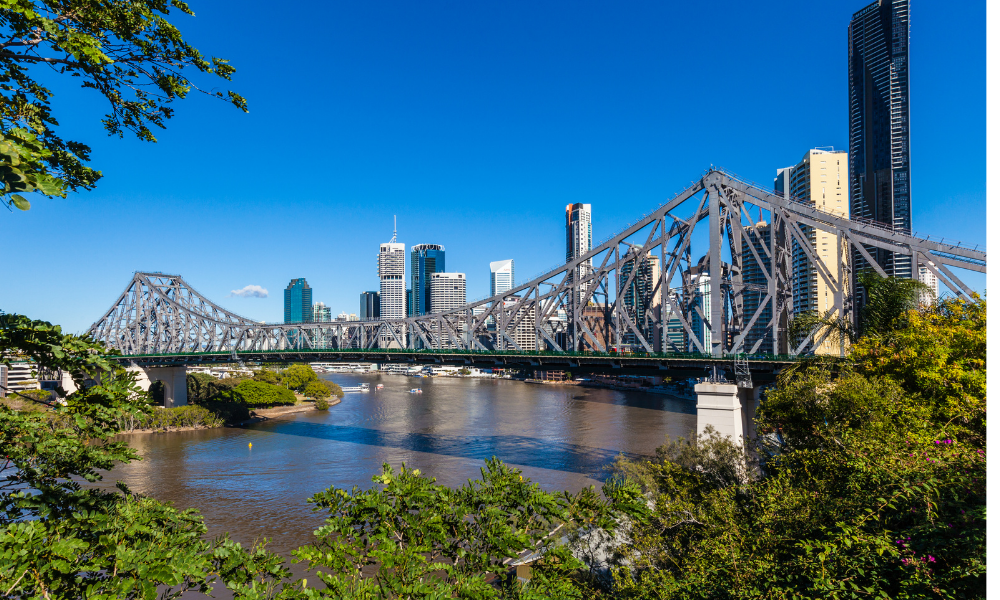
A 2024 council review, reported by the ABC, found the city’s shade cover fell from 35 to 32 per cent in the ten years to 2019. Brisbane has set a goal of 50 per cent shade by 2031, the year before it hosts the Olympic and Paralympic Games. Closing that gap in the next five years means the trees that will deliver it need to be in production now.
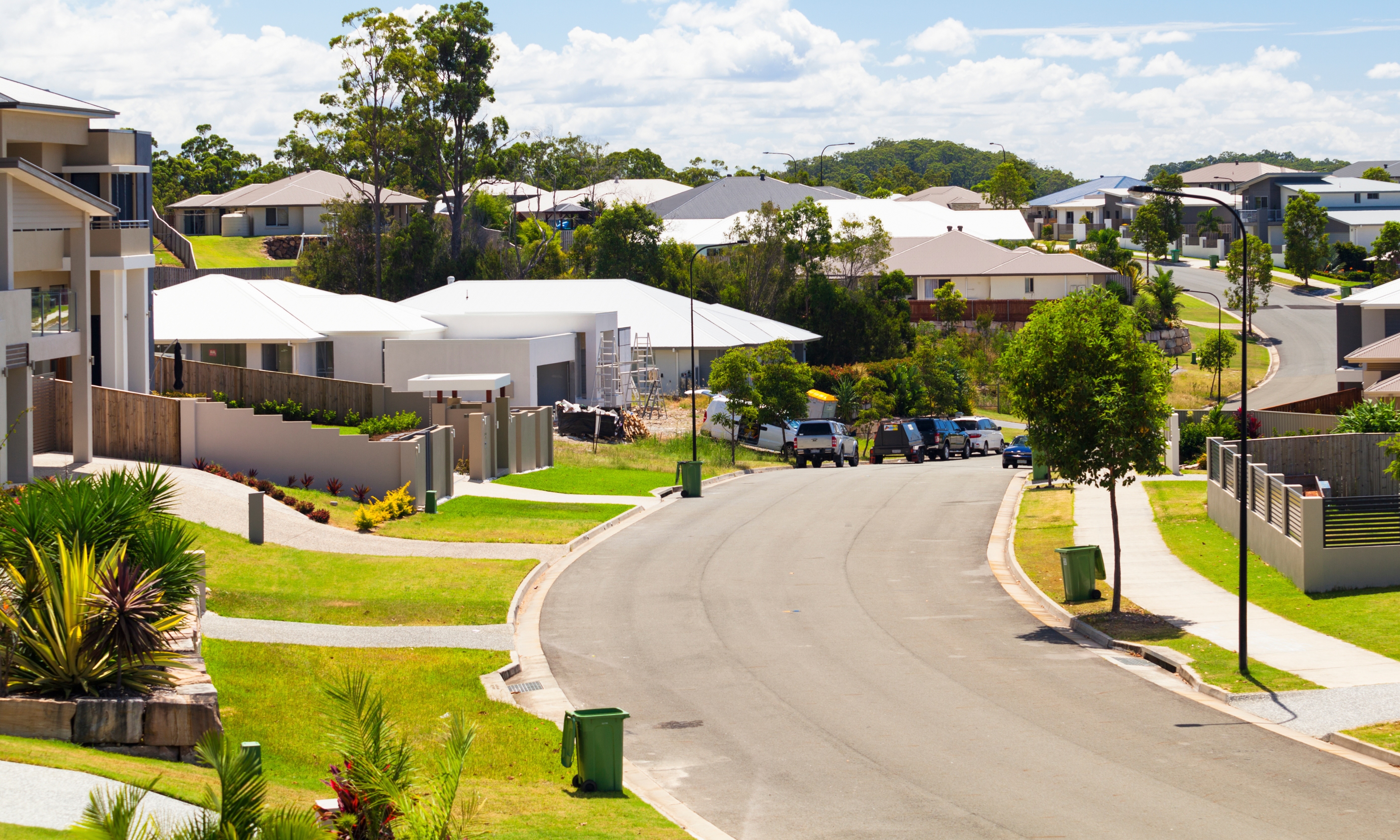
Brisbane is not alone. North Sydney Council has reported the same pattern: canopy cover declined even as it increased street tree numbers and planted more than 600 parkland trees a year. Shade comes from trees that reach full size, and streets make that hard: trees compete with powerlines, pipes, paving and tight verges.
University of Melbourne researchers on Hort Innovation’s Re-imagining Streets project found that fewer trees given better growing conditions deliver more cooling than a larger number of trees planted without that support. Canopy depends on species, stock quality and growing conditions as much as on the number of trees planted.
Hard Surfaces Drive the Urban Heat Island Effect
The urban heat island effect is the extra heat a city holds compared with the land around it.
Australia has warmed 1.51°C since 1910, according to the Bureau of Meteorology and CSIRO, and cities carry an extra load. Asphalt, dark roofs and concrete absorb heat by day and release it at night. In Western Sydney University field measurements, black tiles in full sun reached 82°C.
The Queensland Government identifies heatwaves as Australia’s deadliest natural hazard. Streets make up 80 to 90 per cent of a city’s publicly owned land, according to the Re-imagining Streets report, so street planting is the most direct way to reduce the urban heat effect.
How Trees Reduce the Urban Heat Island Effect
Western Sydney University’s Dr Mahmuda Sharmin measured temperatures under 470 street and park trees across Greater Sydney, in research funded by Hort Innovation. Her findings:
Air temperature: tree shade cut maximum air temperature by 3.7°C on average.
Surface temperature: shaded surfaces ran up to 45°C cooler than surfaces in full sun.
Species and crown: trees with dense foliage and wide crowns cooled most. The London plane delivered more than twice the cooling of the jacaranda.
Biodiversity: trees and shrubs planted together supported more, and more varied, insect life than trees alone.
Canopy Targets Depend on Trees That Take Years to Grow
The NSW Government funds councils to work toward 40 per cent canopy across Greater Sydney by 2036. In South East Queensland, ShapingSEQ 2023 commits the State to measure existing canopy and work with councils to lift it, with targets of up to 50 per cent in suburban areas.
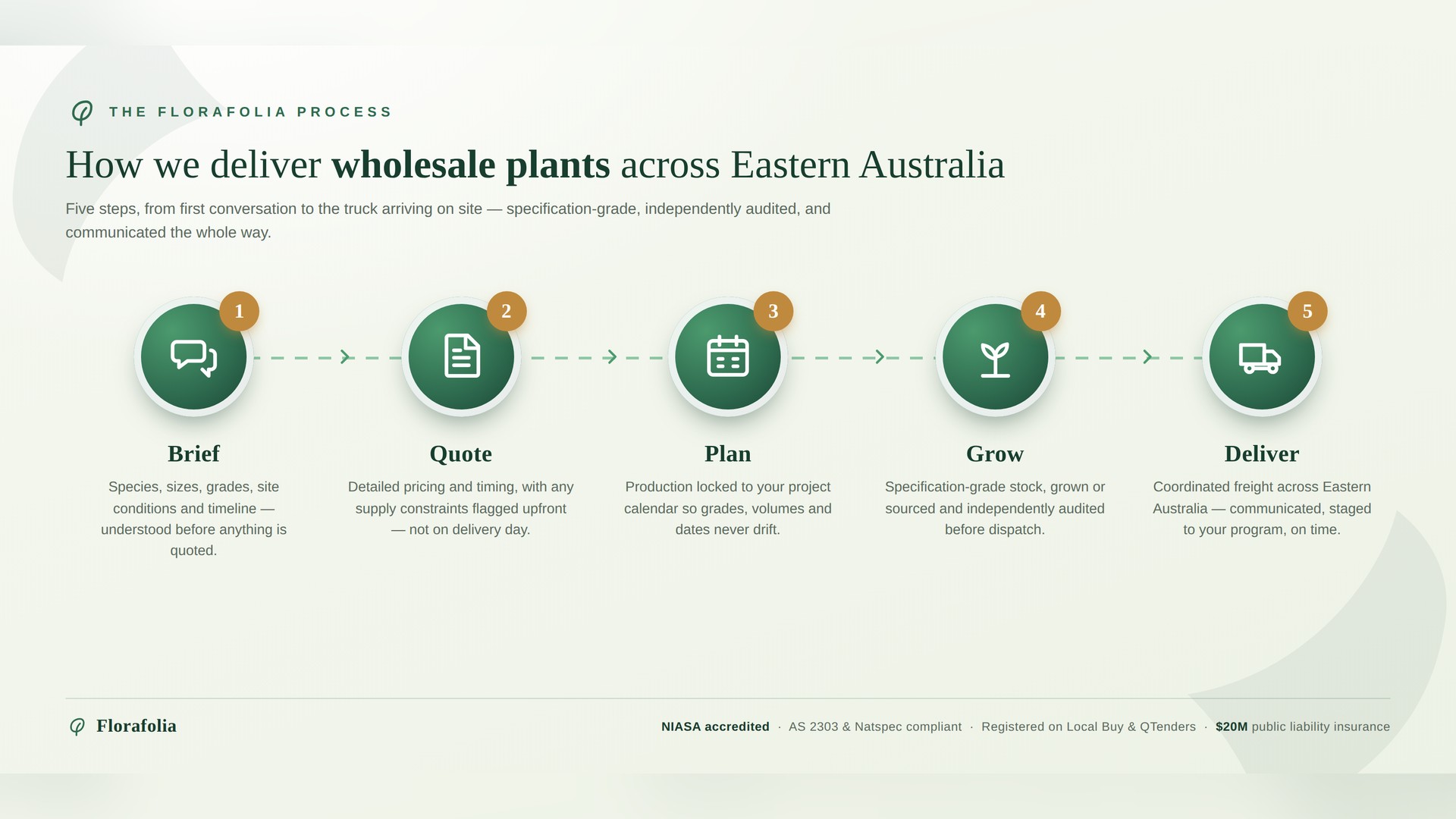
The challenge is turning targets into trees that reach full size. The species and sizes in a canopy plan are not always on the ground when planting starts. Contract growing against the project program secures the species, size and AS 2303 quality the plan calls for. As Confuscious said, the best time to plant a tree was 20 years ago, the second best time is now.
Secure Your Precinct Canopy with Florafolia
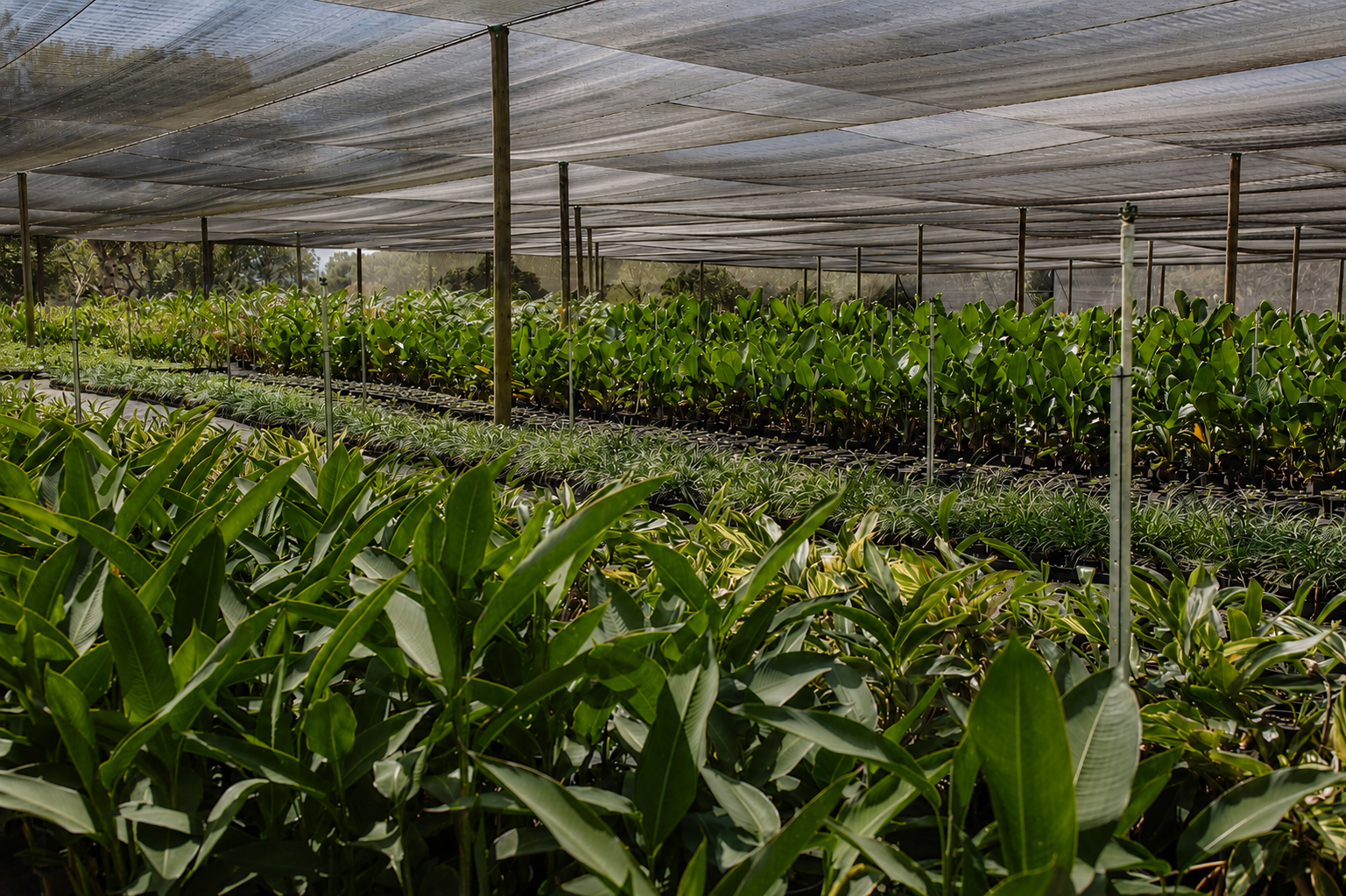
Florafolia grows advanced trees to AS 2303 and NATSPEC, including Tristaniopsis laurina, Waterhousia floribunda, Brachychiton rupestris and Elaeocarpus reticulatus. As a licensed PBR grower, we propagate true-to-type cultivars with consistent form across a batch, and we supply Syzygium ‘Backyard Bliss’ in Northern NSW and Queensland for screening and understorey planting.
For procurement and government buyers:
Request our documentation pack and compliance statement. Call Lynne on 0406 105 626 or email lynne@florafolia.com.au .
For commercial developers and contractors:
Send us your plant schedule and we will confirm availability, lead times and logistics. Call Josh on 0437 328 569 or email josh@florafolia.com.au .
For landscapers and trade buyers:
Ask what is on the bench right now. Call the team on 02 6628 1091 or email sales@florafolia.com.au . You can also find us on Evergreen Connect to check our current availability and place your order directly.
Frequently Asked Questions
What is the urban heat island effect?
The extra heat cities hold compared with the land around them. Asphalt, concrete and roofs absorb heat during the day and release it at night.
What is the impact of the urban heat island effect in Australia?
The biggest impact is on health. The Queensland Government identifies heatwaves as Australia’s deadliest natural hazard, and people in Queensland’s major cities face the highest increase in mortality risk during heatwaves.
Do trees cool cities at night?
Trees cool most during the day. Western Sydney University research found cooling under tree canopies peaked in the morning, while by 6pm air under some canopies was up to 3.8°C warmer than the surrounding air. Cooling plans need to account for the whole day, not just the midday peak.
Why plant shrubs if trees provide the shade?
Trees and shrubs planted together support more, and more varied, insect life than trees alone, including pollinators, according to Western Sydney University research.
How can government bodies and councils procure plants from Florafolia?
Florafolia is NIASA accredited and a Local Buy pre-qualified supplier under arrangement LB305 . We also respond to Queensland Government tenders through Qtenders.
About the Author
Lynne Sutherland is Co-owner and Managing Director of Florafolia, a NIASA-accredited wholesale nursery in Rous, Northern NSW. She holds a degree in Horticultural Science from Lincoln University and postgraduate qualifications in management, following a senior executive career in ASX top 10 companies. She is Chair of Northern Rivers GINA and a non-executive director of Greenlife Industry Australia.
References:
ABC News. (2025, June 13). Brisbane’s shade cover falls short of targets ahead of 2032 Olympics.
Bell, S., Soanes, K., Dade, M., Langenheim, N., Nice, K., Blackham, D., & Croeser, T. (2026). Re-imagining Streets with Green Infrastructure (Final Report GC22011). Hort Innovation.
Brisbane City Council. (n.d.). Street and park trees.
Brisbane City Council. (n.d.). Street tree species selection guide.
Bureau of Meteorology, & CSIRO. (2024). State of the climate 2024. Commonwealth of Australia.
NSW Department of Planning and Environment. (2022, October). Greening our City grant guidelines. NSW Government.
Queensland Government Department of State Development, Infrastructure, Local Government and Planning. (2023). ShapingSEQ 2023 background paper 5: Live theme.
Sharmin, M. (2022). Urban vegetation: Towards cooler, biodiverse cities of the future [PhD thesis, Western Sydney University].
Sharmin, M., Tjoelker, M. G., Pfautsch, S., Esperón-Rodriguez, M., Rymer, P. D., & Power, S. A. (2023). Tree crown traits and planting context contribute to reducing urban heat. Urban Forestry & Urban Greening, 83, 127913. https://doi.org/10.1016/j.ufug.2023.127913
Sharmin, M., Tjoelker, M. G., Pfautsch, S., Esperón-Rodriguez, M., Rymer, P. D., & Power, S. A. (2023). Tree traits and microclimatic conditions determine cooling benefits of urban trees. Atmosphere, 14(3), 606. https://doi.org/10.3390/atmos14030606
North Sydney Council. Canopy cover status report to Council. Introduction and canopy tables: canopy decline despite increased street tree numbers and more than 600 parkland trees planted a year. https://www.northsydney.nsw.gov.au/ecm/download/document-9274914